
Project Packer
How to end the FIFA monopoly.

The 2026 World Cup final is at MetLife Stadium in New Jersey. The cheapest secondary market ticket is over $2,000. There’s no parking at the stadium. The nearest car park is at the American Dream Mall, where a single space costs $225. The normal price is $6. NJ Transit from Penn Station, an 18-mile trip, costs $150 return. The normal fare is $12.90. Only 40,000 tickets per match. No children’s discounts. FIFA’s own Chief Operating Officer called the pricing model a strategy that will have a “chilling effect” on attendance. We’re already seeing empty seats at the group games.
In December, Gianni Infantino created the FIFA Peace Prize and awarded it to Donald Trump. No nomination process. No panel of judges. Trump placed the medal around his own neck. Two months later he started a war with Iran.
At the FIFA Congress in Vancouver, Infantino tried to orchestrate a handshake between the Palestinian Football Association president and his Israeli counterpart, moments after the Palestinian had spent fifteen minutes explaining how Israeli football clubs operate in illegal West Bank settlements. The Palestinian refused. His vice-president told Reuters: “I cannot shake the hand of someone the Israelis have brought to whitewash their fascism and genocide.”
Infantino has changed FIFA’s statutes so that only full terms count toward the three-term limit. He could remain president until 2031. He has overseen the awarding of a World Cup to Qatar, where migrant workers died building stadiums. He has overseen the awarding of the 2034 World Cup to Saudi Arabia, elected unopposed, in a virtual meeting, with all participants applauding. A governance expert described the process as “a shocking illustration of what democracy means in FIFA.”
This is not a corrupt sporting body. This is a political project. The sporting arm of every authoritarian regime on earth, funded by fans who are being gouged, governed by a man who gives peace prizes to warmongers, and protected by a monopoly that has never been seriously challenged.
Until now. Because for the first time in football history, the legal, commercial and structural conditions exist to build a credible competitor. Not a fantasy. Not a pub argument. A viable parallel international competition modelled on the most successful insurgency in sporting history.
The Packer precedent
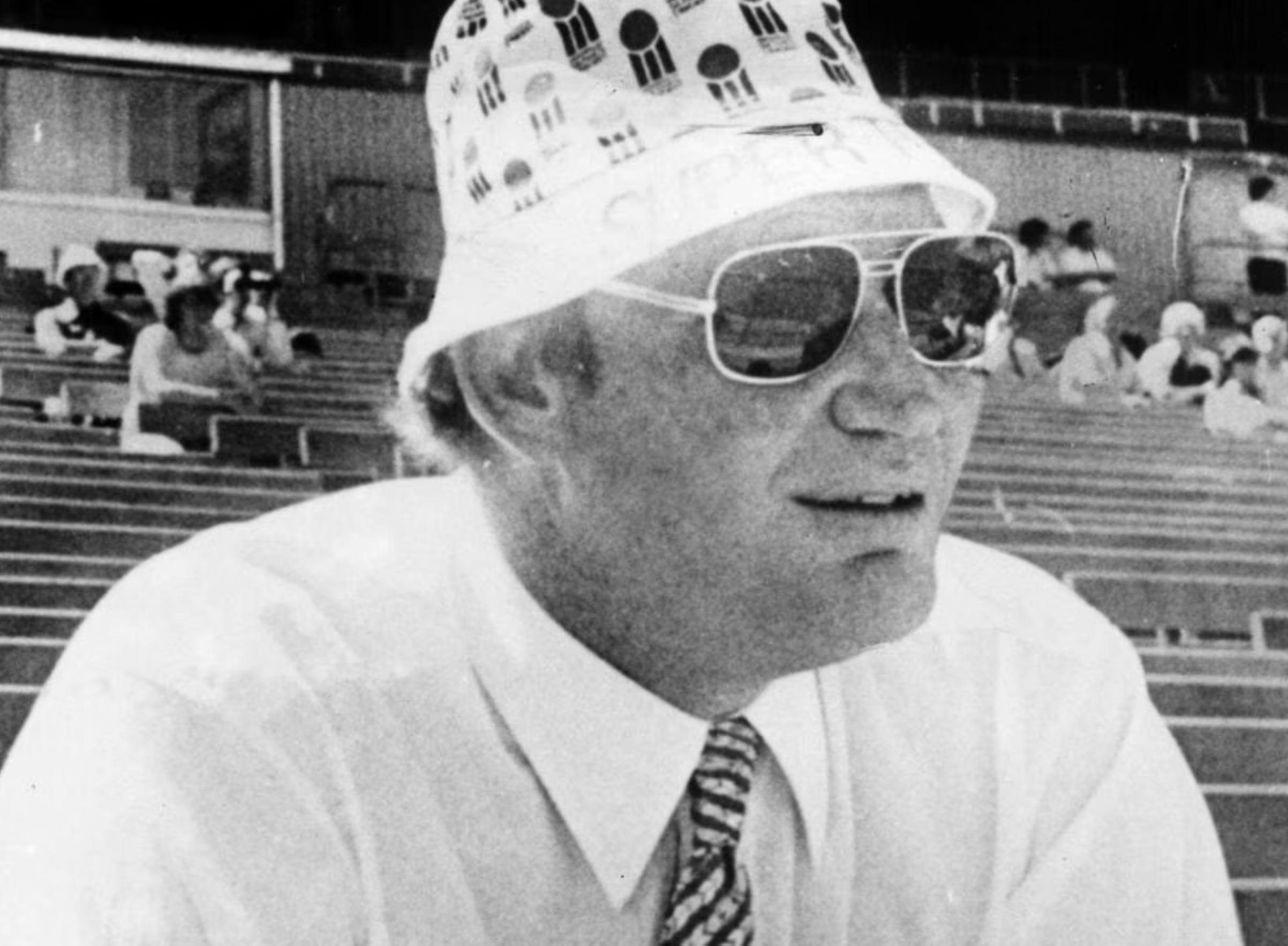
In 1977, Kerry Packer signed 35 of the world’s best cricketers without the cricket establishment hearing a word. He staged World Series Cricket for two seasons, forced the establishment to capitulate, and permanently transformed the sport. The establishment absorbed his innovations (coloured kits, night cricket, player payments, broadcast-first production) because the alternative was irrelevance.
Packer succeeded for one reason that every failed breakaway since has ignored: he signed the labour first, staged the product second, and recruited the institutions last. The European Super League reversed this order. Twelve owners, zero players, announced on a Sunday night and dead by Tuesday. LIV Golf had sovereign capital but no distribution. It bought players and then begged for a broadcast deal. Every failed insurgency in modern sport failed because it started with the institutions or the money and assumed the players would follow. Packer started with the players and let the institutions catch up.
And Packer succeeded for a second reason: he was the distributor. World Series Cricket was not an investment. It was programming for a television network he owned. Every dollar of “loss” was content spend. He didn’t need the establishment to broadcast his product because he was the broadcaster. The funder must be the distributor, or the venture rents legitimacy from the incumbents it is trying to disrupt.
The legal ground has shifted
Three rulings of the Court of Justice of the European Union have fundamentally changed the terrain.
The European Super League ruling (December 2023) established that FIFA and UEFA may operate approval regimes for rival competitions, but only under criteria that are transparent, objective, non-discriminatory and proportionate. The self-executing ban hammer, the threat that killed the Super League in 48 hours, is gone within EU jurisdiction.
The International Skating Union ruling (same day) established that a governing body that is simultaneously a commercial operator cannot use eligibility rules to foreclose rival events. This cracks the Swiss procedural fortress that has protected FIFA for decades.
The Diarra ruling (October 2024) established that FIFA’s transfer rules restricting player movement violate free movement and competition law. The practical consequence: contractual architecture that engages players for windowed competition outside their club duties is more legally defensible than at any point in football history.
And the live institutional siege reinforces the doctrine. FIFPRO Europe, European Leagues and LaLiga have filed a formal competition complaint with the European Commission over FIFA’s unilateral control of the international match calendar. FIFA’s conflict of interest, regulator and promoter in one body, is now the subject of formal Commission scrutiny. Any new venture builds on terrain that is already being litigated by parties with standing, resources and grievance.
A parallel competition does not need to ask FIFA’s permission. It launches, and forces FIFA to choose: sanction the players (walking into Article 102 litigation it will likely lose, with damages exposure) or acquiesce (demonstrating to players and federations that the kill switch is unplugged). The lawfare is the product launch.
The modern Packer is a streaming platform
Netflix, Apple, Amazon and YouTube have spent a decade rationed by sports-rights monopolies, paying inflated tolls for slices while FIFA auctions World Cup rights at monopoly prices each cycle. For a platform spending $15-20 billion annually on content, underwriting an entire international football property at roughly $1.5 billion per year is a line item. What it delivers is streaming’s scarcest commodity: simultaneous global live audience. The churn-killer.
Structure: one streamer as anchor plus one or two regional free-to-air partners, because cultural penetration requires free reach and full paywalls kill prestige (Packer understood this). That yields a $4-5 billion five-year war chest. Enough to sign the players, stage the tournament, absorb the litigation, and outlast FIFA’s counter-moves.
And here is the critical discipline: the cap table is the narrative. Gulf sovereign money is not suboptimal. It is disqualifying. It converts the project from reform movement to LIV overnight. The moral wedge is anti-authoritarian. The funding must match. Streaming capital is clean capital. It has no geopolitical agenda beyond subscriber growth. That distinction is the difference between a venture the world roots for and a venture the world rolls its eyes at.
Player economics: equity, not wages
LIV Golf paid salaries and bought attendance, not belief. Players spent press conferences apologising for being there. The fix: the first 200 players are not employees. They are founders. Guaranteed three-year contracts plus a meaningful equity pool of 15-20 per cent of the venture. Mid-career stars become owners with upside rather than mercenaries with a signing bonus.
Two hundred player-owners inside FIFPRO constitute a pre-positioned political army for the moment federations need to see that defection is already a fact. The venture is not buying labour. It is buying the union’s median voter. And the contracts are structured under Diarra: windowed commitments that never touch club employment, slotted into calendar gaps FIFA created by bloating its own schedule. Clubs, bleeding from the Club World Cup land grab, are at worst neutral and at best quiet allies.
Governance as the product
FIFA’s deepest vulnerability is not legal but constitutional. A Swiss Verein, a members’ association with the accountability apparatus of a nineteenth-century gymnastics club, controlling a multi-billion-dollar enterprise. One-federation-one-vote means San Marino equals Brazil, which means the presidency is held by aggregating small federations dependent on development grants. There is no external regulator. No shareholder discipline. No meaningful scrutiny.
The competitor’s governance design is therefore not compliance overhead. It is the moral pitch, the legal shield, and the product differentiation in one structure.
Multi-stakeholder chambers: voting power split across federations, players (via their unions), leagues and clubs, and fans, such that no single constituency can capture the body. Federation voting weighted by registered players or competitive standing, not flat (which recreates FIFA’s purchasable Congress) and not by wealth (which recreates the Super League’s plutocracy).
Separation of regulator and promoter: commercial operations in a subsidiary with independent directors, sporting regulation in a non-profit that cannot own competitions. This severance is precisely the conflict of interest the EU complaint targets in FIFA. Building it cleanly from day one is both shield and story.
A global fan membership carrying genuine governance representation. The Barcelona socio model, scaled. Twenty dollars a year. Ten million members is $200 million in revenue that doubles as a political constituency no government or federation can dismiss. Every anti-fan decision FIFA makes becomes unpaid marketing for the alternative.
Manufacturing prestige
The competitor does not out-World-Cup the World Cup. It builds the inverse. Twelve to sixteen teams, best-only, no qualifying bloat. The tournament the World Cup was in 1970. Every match elimination-grade. Biennial, staged in the World Cup gap years. Never head-to-head, always the contrast.
The identity: the players’ tournament. Player-owned, fan-governed, honestly priced. Tickets capped as constitutional policy. Fan goodwill is the moat, not the margin.
The Ryder Cup proves that format can manufacture meaning without history. An Argentina-Brazil or France-England knockout in a sixteen-team field generates prestige instantly. And the calendar gods have supplied the recruitment posters: a 2030 World Cup sprawled across six countries and three continents, followed by Saudi Arabia 2034. The argument that FIFA has lost the plot does not need making. It needs scheduling against.
The endgame
The realistic endgame is not FIFA’s destruction. It is the Packer outcome: a negotiated settlement on governance reform. Two seasons of credible parallel structure force the football establishment to capitulate and absorb the rebellion’s innovations, the way cricket absorbed Packer’s. Separated commercial and regulatory functions. Calendar co-determination with leagues and unions. Fan representation. Term limits with teeth. A venture whose stated objective is reform-and-reintegration is easier to sell to sponsors, broadcasters and governments than a new FIFA.
And if Zurich refuses to settle, the venture has accidentally built the thing that outlives it.
The assembler problem
This venture requires roughly $4-5 billion in committed capital and trusted access to football’s agency layer. No individual holds that key. Ventures at this scale are not founded. They are assembled. And the assembler is rarely the party with the money or the players. It is the party whose name is attached to the fully formed strategic case at the moment a platform executive, a league president, or a players’ union board goes looking for one.
The concept is not the moat. The moat is capital, relationships and convening credibility. What is ownable is attribution. This essay is my claim on that attribution. The full strategic architecture, including sequencing, raid mechanics and failure-mode analysis, exists in a detailed working paper. If you are in a position to act on it, I’d like to hear from you.
Jasper Clifford-Smith is Head of Commercial Partnerships at Thinkable.Events and Senior Advisor (Fundraising Development) to the Australian Greens. This piece draws on a Multiphonic working paper. Contact: multiphonic.com.au